
Powered by Science
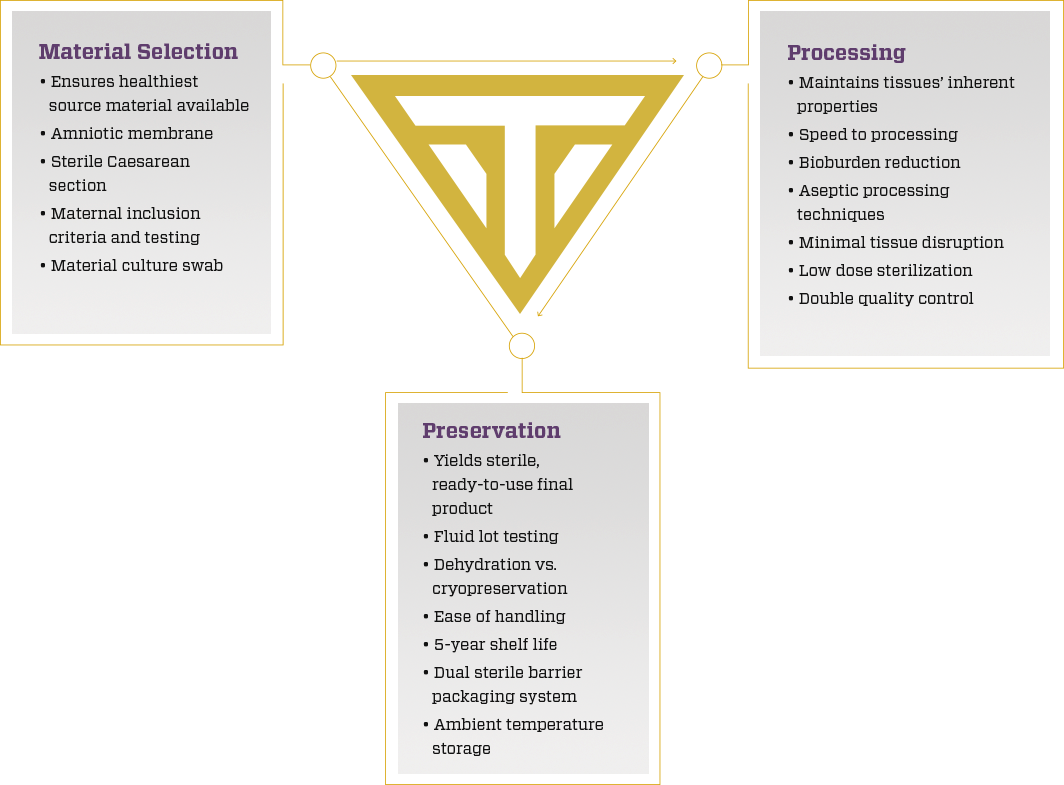
While nature has engineered an ideal wound healing scaffold, it is the responsibility of the processor to make the grafts as safe as possible with minimal disruption to the delicate components. At Triad, we employ best-in-class material selection criteria, aseptic processing and low dose sterilization techniques to provide the care givers and patients with the safest and most reliable grafts possible.
References3: Hussey, George S., et al. “Extracellular Matrix-Based Materials for Regenerative Medicine.” Nature Reviews Materials, vol. 3, no. 7, 29 July 2018, pp. 159–166., doi:10.1038/s41578-018-0023-x. 4: Schultz, Gregory S., et al. “Dynamic Reciprocity in the Wound Microenvironment.” Wound Repair and Regeneration, vol. 19, no. 2, Mar. 2011, pp. 134–148., doi:10.1111/j.1524-475x.2011.00673.x. |
What We Don’t Do
It’s important to highlight what Triad does not use in our processing of our placental tissue. Based on our experience, the following reagents may diminish the integrity of the material and are therefore avoided.
| Glutaraldehyde3,4 DMSO3,4 Peracetic acid Hydrogen peroxide 3%-30% Acetic acid 0.10N-0.6N Sodium hydroxide 0.1N-2.0N Calcium hydroxide Hydrochloric acid 0.6N-4.0N EDTA Povidone iodine Carbodiimide Acetone Tetrahydrofuran RPMI (all variants) Triton X Brij 35 ETOH 20%-100% Isopropyl alcohol 70% Methanol 40%-100% Sucrose Glucose Albumin Dextran Glycerol Chlorhexidine |